If you’re missing most or all of your teeth, you may be surprised to hear that tens of millions of Americans
are in a similar situation. While dentures can be affordable and look and feel better than ever, they don’t
offer the same benefits that come with implant dentures. Whether you are tired of your existing denture or
don’t want to settle for a traditional option, give the team at Nu Dental Eatontown a call to schedule a
consultation and determine if implant dentures are right for you!
What are Implant Dentures?
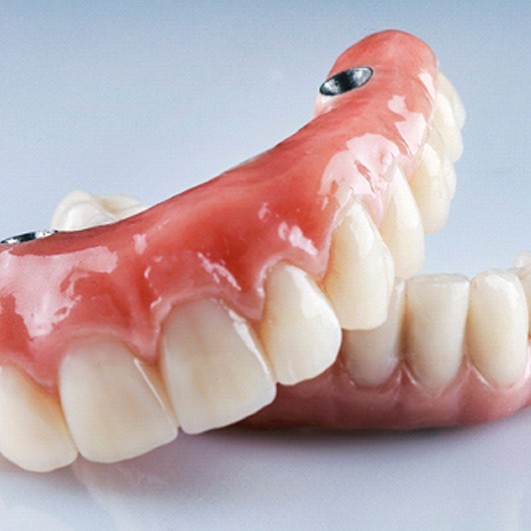
An implant denture looks similar to a traditional denture with one key difference: the prosthetic attaches to a
series of dental implants surgically placed inside of the jaw. This is dramatically different than how dentures
typically stay in place (i.e. through natural suction to the gums). The implants are designed to mimic the tooth
roots as closely as possible. As a result, your tooth replacement feels more natural, lifelike, and functional,
whether you’re eating, speaking, or smiling.
Depending on your needs and preferences, you can have your implant denture be removable or fixed. Below, you can read
more about the differences ahead of your consultation.
Fixed/Permanent Implant Dentures
A fixed implant denture is meant to stay attached permanently, whether you’re performing oral hygiene at home
or receiving a cleaning at a dental office. If it does require removal, it would only be taken out by a dentist. In
most cases, four to six dental implants are needed to hold a fixed denture, which means you’ll need more
jawbone density to receive this option.
Removable Implant Dentures
A denture that’s designed to be removable or “snap-on” to dental implants is generally easier to
clean and requires fewer dental implants to attach. If you prefer a denture that feels more traditional and only
needs about two to five implants, then this may be a better solution for your tooth loss.
The Implant Denture Procedure
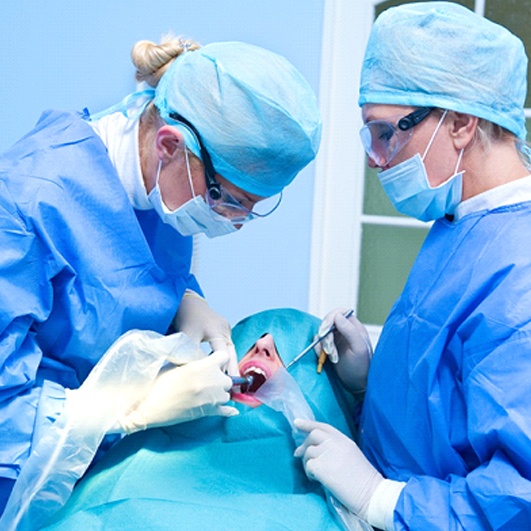
Dr. G places and restores dental implants all in-house, so you can expect your dental implant treatment to be more
convenient to complete. The process is broken into four specific categories: initial consultation, implant surgery,
osseointegration, and restoration. After planning your treatment, we’ll get you scheduled for surgery where
the implants will be placed inside of the jaw. After the gum tissue is stitched closed, we’ll allow four to
six months for the implants to fuse with your bone tissue. Following a series of follow-up appointments,
you’ll be scheduled to receive your permanent restoration.
Am I a Candidate for Implant Dentures?
More adults are eligible for implant dentures than ever, but there are certain qualifications you’ll need to
meet to receive them confidently. After discussing your specific goals, we’ll confirm you have the following:
- Good oral and overall health (and capable of undergoing oral surgery)
- Sufficient bone tissue for the implants to integrate
- No existing dental disease (i.e. tooth decay, gum disease, etc.)
Benefits of Combining Dentures & Dental Implants

By opting for implant dentures over a traditional option, you’ll experience many benefits that you won’t
find from the latter. For example, you can expect:
- A denture that does not slip or shift out of place
- A more natural-feeling tooth replacement thanks to the implant posts’ integration
- A lifelike smile that looks incredibly natural
- A long-lasting solution (dental implants last on average 30 years and longer)
- The ability to eat all your favorite foods with relative ease
- Easier at-home oral hygiene
- No need for denture adhesives or other products to keep your prosthetic in place
Implant Denture FAQs
Should I Have All of My Teeth Pulled to Get Implant Dentures?
If you have natural teeth that are no longer viable (they are extremely weak or severely infected), then we can perform an extraction as a preliminary treatment that will help prepare your smile for implant dentures. However, we do not recommend removing teeth that are perfectly healthy! Natural pearly whites are always going to be best for your oral health, and as powerful as dental implant restorations are, they’re not as strong as organic adult teeth.
If you do have healthy teeth, we can still provide you with a dental implant restoration capable of replacing your dental gaps. It will simply be a partial implant denture, implant bridge, or implant crown instead.
Can I Take Dental Implants Out?
If you opt for a removable or “snap-on” implant denture, then you’ll be able to take out the denture part of your restoration, but not the implants themselves. The dental implants will be completely fused with your jawbone after osseointegration, making them impossible to remove without surgery.
How Successful Are Dental Implant Restorations?
Dental implants have an outstanding 95% success rate that stays constant even after 10 years from initial placement. In other words, the vast majority of patients don’t experience serious complications or side effects for at least 10 years after receiving a dental implant restoration.
When dental implants do fail, it’s typically for one or more of the following reasons:
- Untreated gum disease
- Unforeseen accidents, injuries, or damage
- Incomplete osseointegration
- Frequent tobacco usage
How Long Does It Take to Recover from Dental Implant Surgery?
It ultimately depends on the person, but many patients are able to return to their normal routines within 48 hours of dental implant surgery. However, recovering from dental implant surgery and osseointegration are two separate processes. Just because you feel like your usual self doesn’t mean that your implants and jawbone are completely fused together. It’s important to keep following post-op instructions for the next several months.
Can I Get Implant Dentures If I Smoke?
We handle this on a case-by-case basis. Smoking doesn’t automatically disqualify you from implant denture treatment. The problem is that the chemicals in tobacco products can cause many different oral health problems that increase the likelihood of dental implant failure. They also slow the body’s natural healing process and can interfere with osseointegration, meaning patients have to be able to quit smoking entirely for several months.
Our team won’t judge your smoking habits, so please be honest when describing how frequently you smoke. Your implant dentist in Eatontown may very well be able to personalize your treatment plan to help you successfully receive an implant denture!


 (732) 863-3899